
Gippsland concreter
Epoxy Flooring in Sale & Gippsland
A floor coating is only as good as the prep underneath it. We grind the slab back with diamond cutters, test it for moisture, repair the joints and cracks that need it, and apply the coating system rated to the way the floor will actually get used. Workmanship warranty on every floor.
- 5.0 on 27 Google reviews
- Workmanship warranty on every pour
- Sale-based on Gippsland jobs every week
Get your free quote
Tell us about the epoxy flooring job. Nick will call you back personally.
Recent work
Real jobs from around Gippsland.
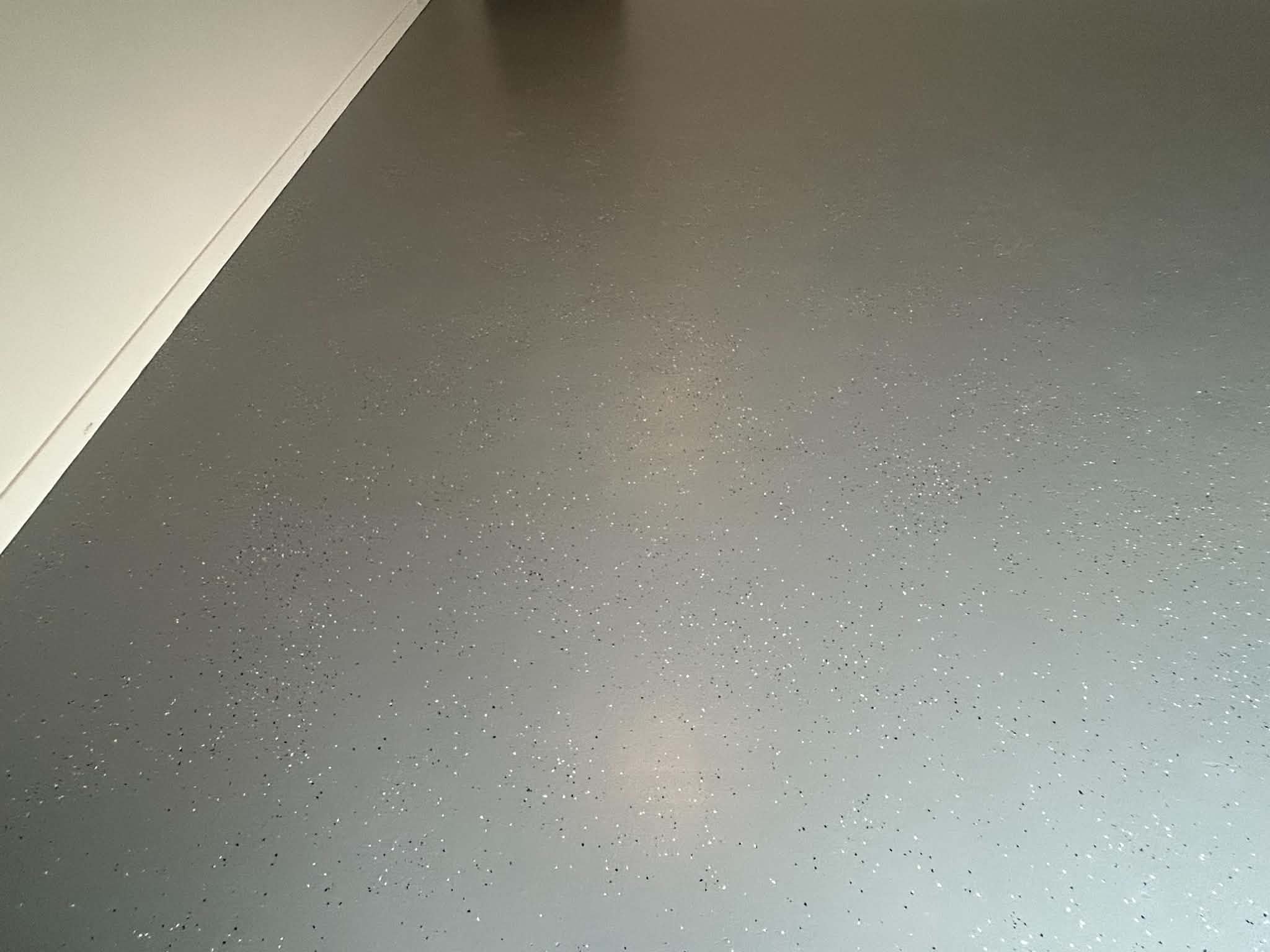
Garage flake epoxy · Sale, Apr 2026
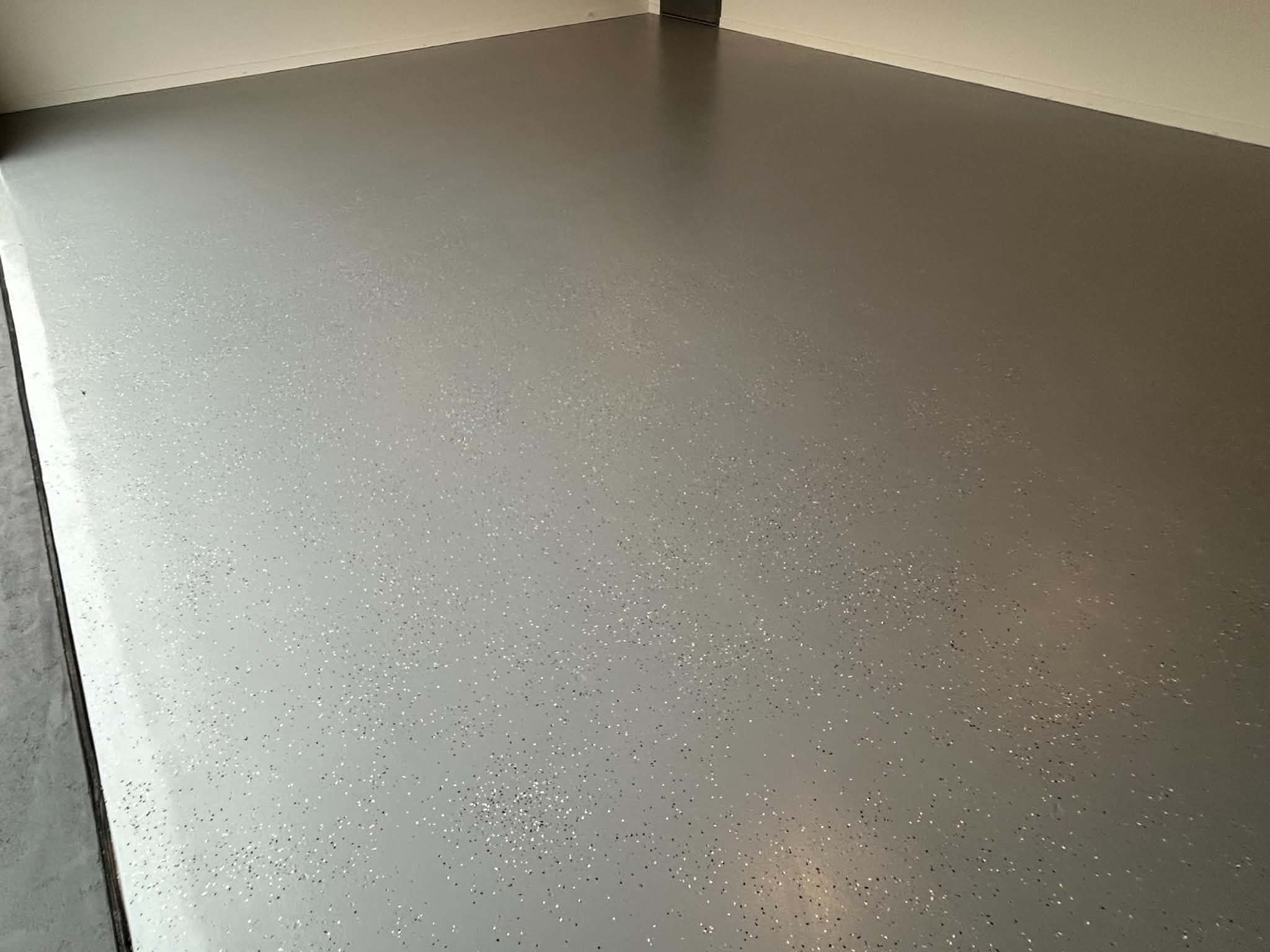
Garage flake epoxy · Sale, Apr 2026
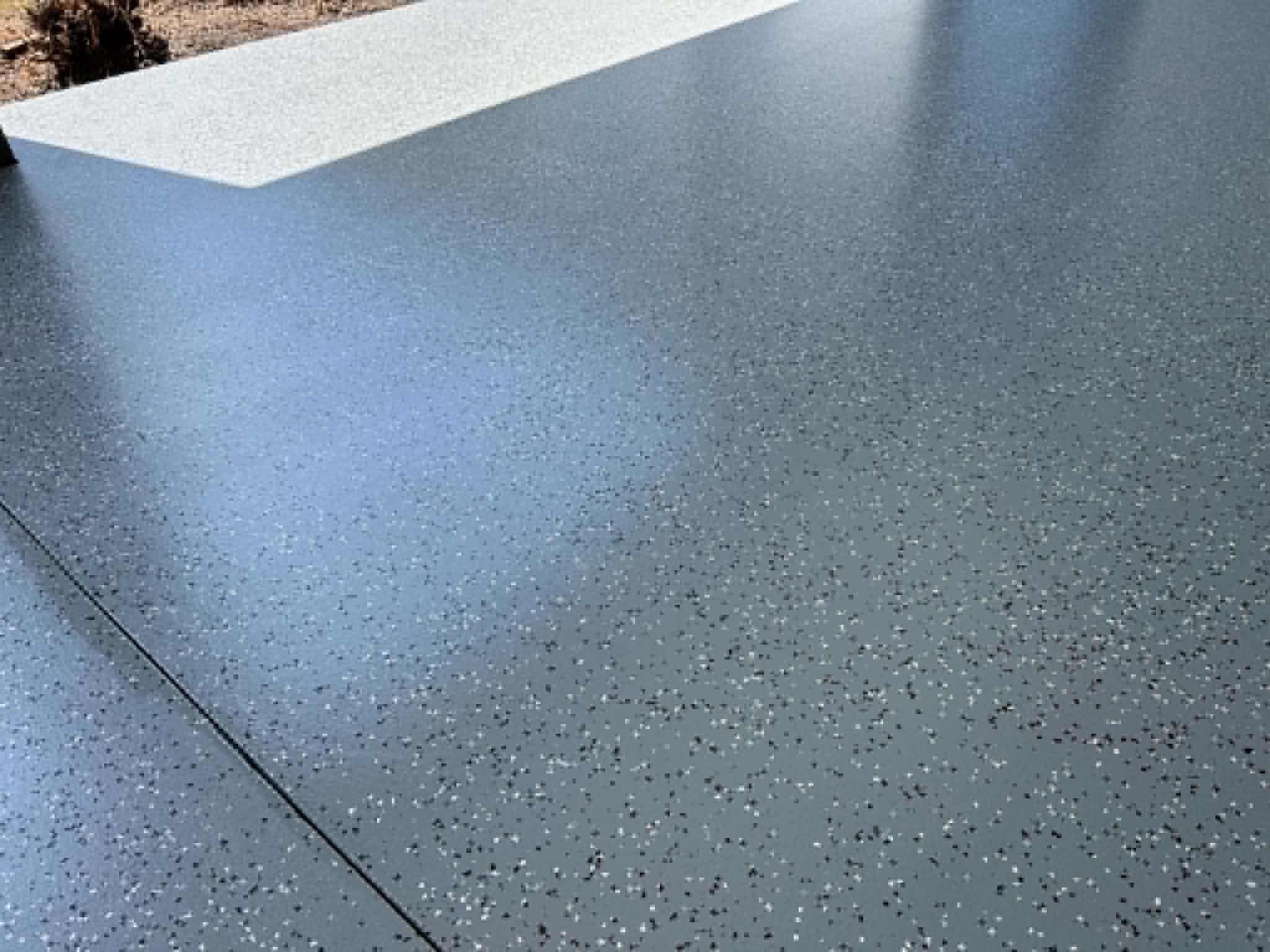
Garage flake epoxy edge detail · Traralgon, Apr 2026
What’s included
Every job covers this.
- In-person site visit, slab assessment and written quote
- Diamond grinding for a proper mechanical key (no acid etching)
- Moisture vapour testing on slabs where it matters
- Crack, spall and control-joint repair before coating
- Primer, build coat and topcoat to the specified film thickness
- Non-slip aggregate broadcast where slip resistance is required
- Coving and chemical-resistant detailing for dairy and washdown floors
- Workmanship warranty on every floor
Why TMT
The reliable local crew.
Trades is a small industry. Reputation matters. Here’s why homeowners across Gippsland keep recommending us.
Local & family-run
Sale-based, on Gippsland jobs every week. You deal with Nick, not a call centre.
Quoted in person
We come and measure, walk through options and follow up with a written quote. No square-metre guesses.
Workmanship warranty
Proper prep, set-out and drainage. Workmanship warranty on every pour.
Turn up when we say
Booked dates honoured. If weather moves us, you hear from us first. No ghosting.
How it works
From quote to handover.
Site visit and quote
Nick comes out, looks at the slab and talks through how the floor actually gets used. Sheds full of farm machinery, dairy parlour washdowns, a domestic garage with the wife’s SUV, a Latrobe Valley workshop with forklifts. They’re all different specs. You get a written quote that names the system, not a generic price per square metre.
Diamond grinding and prep
The slab is mechanically ground back with diamond cutters to open the surface and give the coating a proper key. Existing sealers, laitance, oil contamination and weak surface layers come off in the process. We avoid acid etching. Modern high-build coatings need a CSP 2 to CSP 3 profile that only grinding delivers reliably.
Moisture testing and repair
Older Gippsland sheds were often poured without a vapour barrier, so cold winter mornings push moisture up through the slab and lift coatings off. We test for moisture vapour transmission with a calibrated meter, and step up to a probe test where the job warrants it. Cracks, spalls and tired control joints are routed out and filled with the right resin so they don’t telegraph through the topcoat.
Primer, build coat and topcoat
A primer is rolled into the prepped slab to lock it down and seal the surface. The build coat goes on next to the film thickness specified for the use. If the floor needs grip, non-slip aggregate is broadcast into the wet base coat. The topcoat is the wear layer. It’s what gets walked on, driven on, hosed down and cleaned.
Cure and handover
Foot traffic is usually back within 24 hours. Vehicle traffic typically waits 3 to 5 days for a standard epoxy system, less for a polyaspartic. Full chemical cure can take 7 days. We tell you on handover exactly when the floor is ready for the use you signed up for, and how to clean it so the finish lasts.
Where we work
Gippsland-wide, Sale-based.
Common questions
Answered straight.
- How much does epoxy flooring cost?
- As a 2026 ballpark for Sale and Gippsland, a two-coat 100 per cent solids epoxy on a domestic garage runs about $65 to $85 per square metre, and a flake system with a polyaspartic topcoat about $85 to $120. Heavy-build industrial floors run higher. The rate moves with the state of the slab more than its size, so the written quote comes after the site visit. Our epoxy garage floor cost guide breaks the options down side by side.
- What’s the difference between epoxy and polyaspartic?
- Epoxy is the older, more proven system. It builds film thickness well, takes heavy traffic and chemical exposure, and is the go-to for industrial and commercial floors. The trade-off is cure time (16 to 24 hours per coat) and that some epoxies will yellow under direct UV unless the topcoat is UV-stable. Polyaspartic is a faster-cure coating (1 to 2 hours per coat) that’s UV stable straight up, so a domestic garage can sometimes be done in a single day. It costs more per square metre. Which one suits depends on the floor, the use and how much downtime you can wear. We spec it on the site visit, not over the phone.
- How long does an epoxy floor last?
- On a well-prepped residential garage with a quality system, 10 to 20 years is a fair expectation. Light commercial floors typically run 5 to 15 years before they want a refresh. Industrial floors with heavy forklift traffic or chemical exposure depend heavily on the system specified. The thing that determines lifespan more than the brand of resin is the prep underneath. A premium coating over a poorly ground, untested slab will fail in 12 months. A mid-range coating over a properly prepped slab will last decades.
- Can you epoxy over an existing slab?
- Yes, if the slab is structurally sound. Surface sealers and contaminants are removed by diamond grinding. Cracks and joints are repaired. Moisture vapour transmission is tested. If the slab passes those checks, an epoxy or polyaspartic system bonds well. If there are structural cracks, heave or a serious moisture problem, we’ll tell you. Coating won’t fix a failing slab. In that case a new pour might be the better long-term call, and our house, shed and commercial slabs service handles those.
- Why does the slab have to be diamond-ground rather than acid-etched?
- Acid etching opens up the surface a little, but it doesn’t remove sealers, oil contamination or weak surface laitance properly, and the profile it leaves is inconsistent. Diamond grinding is mechanical, repeatable and removes the top millimetre or two of compromised concrete in one pass. It gives the coating something proper to grab. The cost of doing the prep properly is small compared to the cost of stripping a failed coating in two years and starting over.
- What about non-slip finishes for wet areas and washdown floors?
- Slip resistance is broadcast into the base coat with aggregate. The grade of aggregate (fine to coarse) is matched to the application. Aluminium oxide is a hard-wearing all-rounder, quartz looks decorative and gives good grip, and polymer beads are softer underfoot for areas like spas and gyms. For dairy and food-grade floors we typically spec a coarser broadcast and a chemical-resistant topcoat. Slip ratings are measurable: AS 4586 wet pendulum testing is the Australian standard, and we’ll specify the classification (P3, P4 or P5) the floor needs to meet if there’s a compliance reason.
- I’ve got an old farm shed without a vapour barrier under the slab. Is epoxy still an option?
- Often yes, but the spec has to suit the slab. Older Gippsland sheds and farm workshops were regularly poured straight onto compacted ground without a builder’s plastic underneath. In winter, ground moisture migrates up through the slab and lifts coatings off if you don’t plan for it. We test the slab for moisture vapour transmission and step up to a vapour-barrier primer rated for high MVT slabs where the readings call for it. It costs a bit more in product, but it’s the difference between a floor that lasts and one that bubbles in the first cold snap.
- How long does the installation take?
- A standard double-garage epoxy job is 2 to 3 days on site (grind day, primer and base coat day, topcoat day) plus cure time before the cars go back in. A polyaspartic system can sometimes drop that to a long single day for a small floor. Larger commercial and industrial floors are scoped against the downtime the business can wear. Tell us the constraint and we’ll work out a sequence that suits it, including overnight pours if the floor has to be back in service the next morning.
- Does the slab need to be new, or does it need time to cure first?
- New slabs need to cure before coating. A water-based primer can usually go down at 21 to 28 days. Solvent-based and 100% solids systems prefer the full 28 days minimum. If you’re pouring a new shed or workshop slab and planning to coat it, talk to us early so we can sequence the pour to suit the coating, not the other way around. Our slab service handles new pours.
- What areas do you cover for epoxy flooring?
- We are Sale-based and take epoxy flooring jobs across Gippsland, including Traralgon and the Latrobe Valley, Bairnsdale, Paynesville, Stratford, Maffra, Heyfield, Longford and surrounding areas. Sheds, workshops, dairies, garages, retail floors and commercial slabs.
Get a proper quote
Tell us about the job.
We’ll come and have a look.
Nick measures up in person and follows up with a written quote, usually within a few days. Sale, Traralgon, Bairnsdale, Stratford, Paynesville and across Gippsland. Or call Nick.
Get your free quote
Nick will call you back personally.